Turning Your HSA Into a Tax-Free Income Tool
Most people are familiar with the basic benefits of a Health Savings Account (HSA). Contributions may be tax-deductible, the assets can grow without current taxation, and withdrawals for qualified medical expenses are generally tax-free.
That combination alone makes the HSA one of the more tax-efficient accounts available.
However, the way the account is used over time can significantly influence its long-term value. One approach that is often overlooked is the ability to delay reimbursement for qualified medical expenses. When used thoughtfully, this can allow the HSA to function as a flexible, tax-efficient source of funds later on.
Rethinking How an HSA Is Used
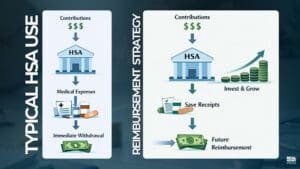
A common approach is to use the HSA as expenses arise—incur a medical cost, reimburse it from the account, and move forward.
While this is a straightforward use of the account, it may limit its longer-term potential.
Under current rules, there is no requirement to reimburse yourself in the same year a qualified medical expense is incurred. As long as the expense occurred after the HSA was established and proper documentation is maintained, reimbursement can generally be taken at a later date.
This flexibility allows for a different approach.
The Reimbursement Strategy
Instead of using the HSA immediately, some individuals choose to pay medical expenses out of pocket and allow the HSA to remain invested.
The key steps are simple:
- Pay qualified medical expenses from personal funds
- Retain receipts and documentation
- Allow the HSA balance to remain invested
- Reimburse yourself at a later time, when appropriate
Because the withdrawal is tied to a qualified expense, it can still be taken tax-free, even if it occurs years after the original cost.
This effectively separates the timing of the expense from the timing of the withdrawal.
An Example of How This Can Work
Consider an individual who incurs $5,000 of qualified medical expenses over time.
Instead of reimbursing those expenses from the HSA, they pay out of pocket and keep the documentation. The $5,000 remains invested inside the HSA.
Over the next 10–15 years, that amount may grow depending on market conditions and investment allocation.
At a later point—perhaps during retirement or in a year where additional cash flow is helpful—they can reimburse themselves for the original $5,000 of expenses. That withdrawal would generally be tax-free.
While the reimbursement amount is tied to the original expense, the benefit comes from allowing the invested assets to potentially grow over time while maintaining flexibility on when to access those funds.
Why This Approach Can Be Valuable
For individuals thinking about long-term planning, flexibility often matters just as much as returns.
Traditional retirement accounts typically generate taxable income when distributions are taken. Taxable brokerage accounts may create capital gains. Even tax-free accounts like Roth IRAs are often used with specific long-term goals in mind.
An HSA used in this manner can provide an additional source of tax-free funds, subject to qualified expenses, that can be accessed when needed.
This may be particularly helpful in situations such as:
- Years where managing taxable income is important
- Periods of market volatility where selling investments may be less desirable
- Early retirement years prior to other income sources beginning
The ability to draw on tax-free funds, when available, can provide an additional layer of flexibility in how income is managed.
Important Considerations
This strategy is not appropriate for everyone and depends on individual circumstances.
It generally requires:
- Sufficient cash flow to cover medical expenses out of pocket
- Consistent recordkeeping to support future reimbursements
- A long-term perspective when managing the account
Additionally, HSAs must be paired with eligible high-deductible health plans, and rules around qualified expenses and distributions should be reviewed carefully.
As with any planning strategy, it is important to evaluate how this approach fits within your overall financial plan.
A Broader Perspective
In many cases, financial planning is less about finding entirely new strategies and more about using existing tools more effectively.
The HSA is a good example. Used in a basic way, it can still provide meaningful tax benefits. Used more intentionally, it may offer additional flexibility and long-term value.
Close
If you are eligible for an HSA, it may be worth reviewing not just whether you are contributing—but how you are using the account over time.
Understanding the available options, including the timing of reimbursements, can help ensure the account is aligned with your broader goals.
If you would like help evaluating how an HSA fits into your overall tax and investment strategy, the team at The Real Money Pros can help you review your situation and determine what approach may be appropriate. Use the “Find an Advisor” tab to get connected!